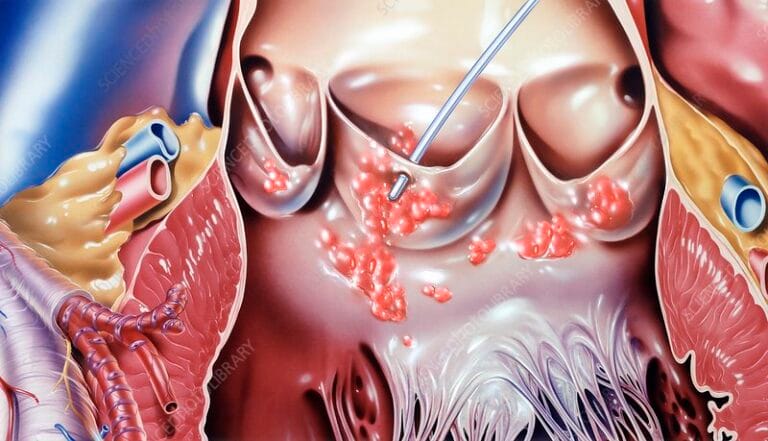
Endocarditis is an infection of the inner lining of the heart (the endocardium), most commonly affecting the heart valves.
It is a serious condition that requires urgent medical treatment.
What causes endocarditis?
It usually happens when **bacteria** (sometimes fungi) enter the bloodstream and attach to damaged areas of the heart.
Common causes include:
* Dental infections or dental procedures
* Skin infections
* IV drug use
* Surgery or medical procedures involving catheters
* Existing heart valve damage
Who is at higher risk?
People with:
* Artificial (prosthetic) heart valves
* Previous endocarditis
* Congenital heart defects
* Damaged or diseased heart valves
* A history of IV drug use
Symptoms
Symptoms can develop slowly or suddenly and may include:
* Fever and chills
* Fatigue
* Shortness of breath
* Chest pain
* New or worsening heart murmur
* Night sweats
* Small red or purple spots on the skin, eyes, or under nails
Why is it dangerous?
Endocarditis can:
* Damage heart valves
* Cause heart failure
* Lead to stroke (if infected clots travel to the brain)
* Spread infection to other organs
Treatment
* IV antibiotics for 4–6 weeks
* Sometimes heart surgery if valves are severely damaged
If someone has a persistent fever plus heart symptoms, they should seek medical care promptly.
If you’d like, I can also explain how doctors diagnose it or how it’s prevented before dental work.
Courtesy :
About the Author