Polycystic Ovary Syndrome (PCOS) is a common hormonal disorder that affects females of reproductive age. It impacts the ovaries, hormones, menstrual cycle, and sometimes overall health. What happens in PCOS In PCOS, the ovaries may: Produce higher-than-normal 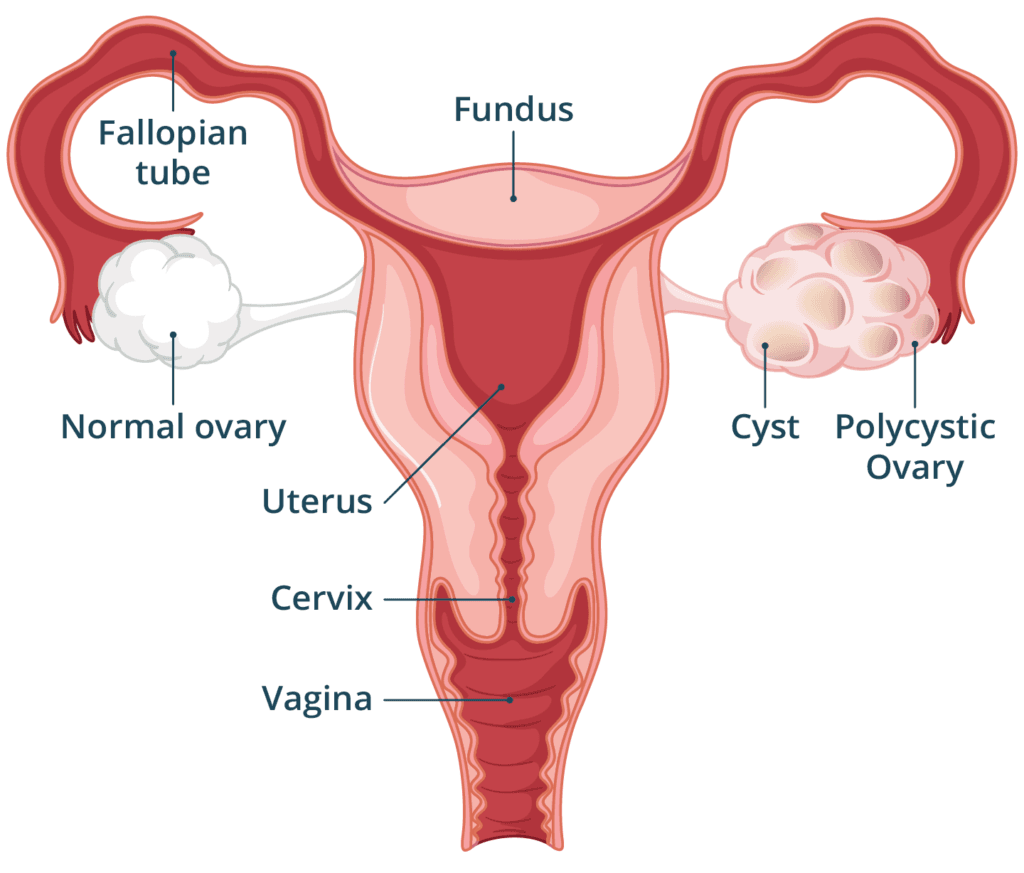 male hormones (androgens) Develop many small fluid-filled sacs called cysts Fail to release eggs regularly (irregular ovulation) This can cause menstrual and fertility problems.
Common symptoms Symptoms vary from person to person, but often include: Irregular or missed periods Excess facial or body hair (hirsutism) Acne or oily skin Weight gain, especially around the abdomen Thinning hair or hair loss on scalp Difficulty getting pregnant Dark patches on skin (neck, armpits) Ovarian cysts (seen on ultrasound) Some women have mild symptoms; others have more severe ones.
Causes The exact cause is unknown, but factors include: Hormonal imbalance Insulin resistance Genetics (runs in families) Lifestyle factors Health risks if untreated PCOS can increase risk of: Infertility Type 2 diabetes High blood pressure Heart disease Depression and anxiety Endometrial (uterine) problems Diagnosis Doctors diagnose PCOS using: Medical history and symptoms Blood tests (hormone levels) Ultrasound of ovaries Physical examination Treatment There is no permanent cure, but it can be managed. Common treatments include: Lifestyle changes Weight loss (even 5–10% helps) Healthy diet Regular exercise Medications Birth control pills (regulate periods) Metformin (improves insulin resistance) Medicines to help ovulation (if trying to conceive) Anti-androgen medicines (reduce hair growth) Important fact Many women with PCOS can live normal, healthy lives and even get pregnant with proper treatment. If you want, I can also explain:
About the Author